
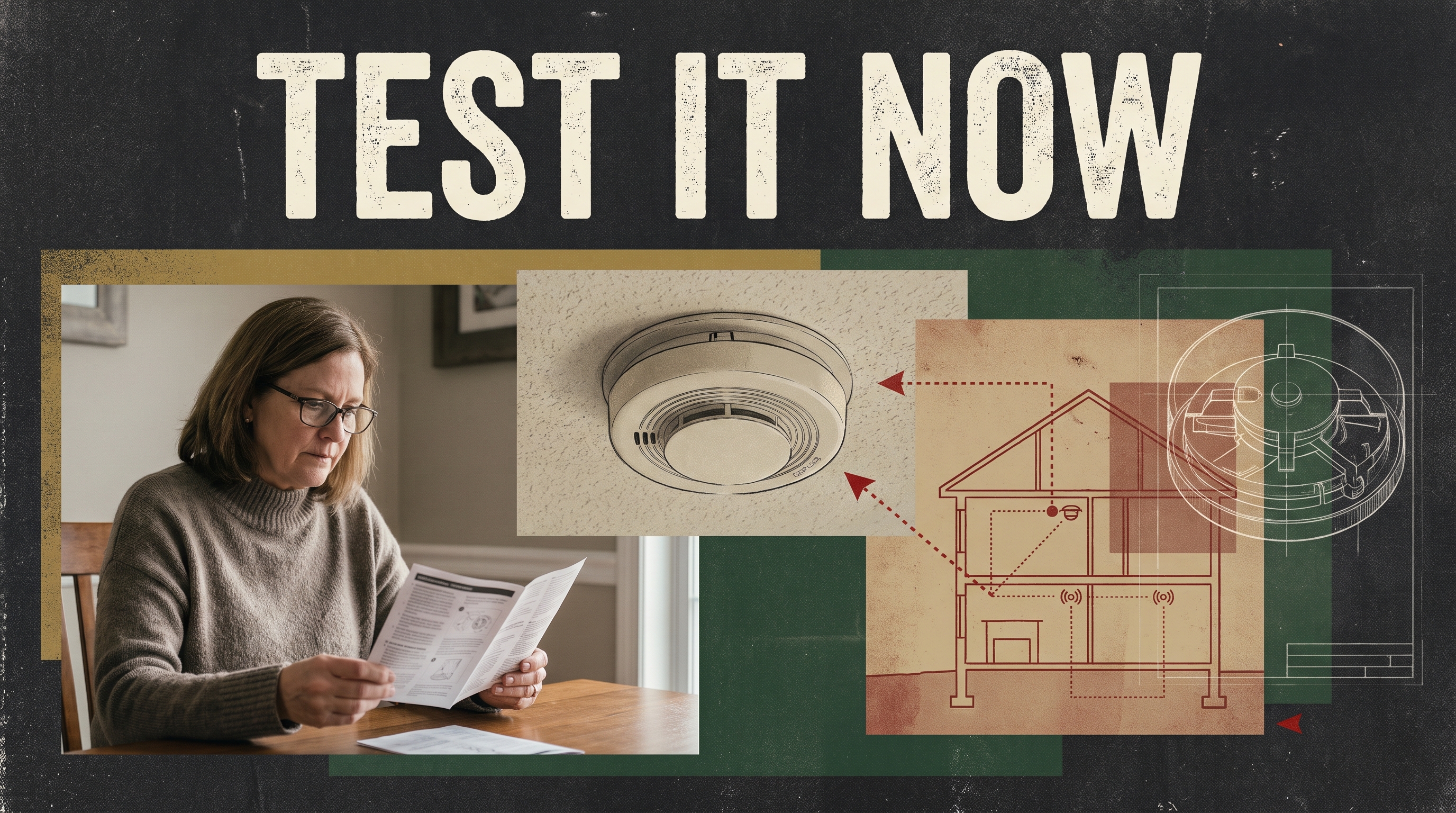
Your Daily Install connects what’s happening now with a useful pattern from the past—and one simple step you can take today to make your household more resilient.
Print the action worksheet below, fill it in, and add it to your Household Resilience Network binder.
What’s happening now?
Most U.S. clocks go back next Sunday, November 1. The yearly reminder to check smoke alarms is coming, too.
You do not have to wait for the clock. An alarm can sit on the ceiling for years and become part of the room. Seeing it is not the same as testing it.
Today, turn one familiar object into a checked part of your plan. The U.S. Fire Administration recommends monthly smoke-alarm tests, following the maker’s directions.
Has this happened before?
In 1972, Hurricane Agnes destroyed homes across the East. Federal housing officials provided 17,000 mobile homes for the relief effort. Each had a smoke alarm, following recommendations from federal researchers.
NIST’s history records fires in those homes over the next three years, but no fire deaths. Researchers kept asking how alarms should work and where they should go.
They used houses due for demolition at Indiana Dunes for real-house fire tests. An alarm had to earn its place through testing, not just look reassuring in a box.
What happened next?
The research helped shape smoke-alarm product and installation standards. Homes gained a low-cost way to warn people earlier.
The pattern: safety equipment becomes useful when it is installed, checked and kept working. A test house is not your hallway. The household part is much simpler: follow the instructions and find the problem before the alarm is needed.
Before you buy more backup gear…
The lights fail. Your backup plan suddenly feels small. A veteran’s battery-backup guide takes a different route. What is it?
Tap Here to See the Battery-Backup Idea →What can I do?
Give this check 10 minutes. Pick one smoke alarm. Read its test directions and warn everyone in the home about the sound, including anyone who needs help.
Test it as directed if you can reach it safely. Never use a flame or climb on an unstable chair. Get a capable helper if access is difficult.
Write down the result and the alarm’s replacement date if it can be read safely. Replace a failed or expired alarm promptly according to its instructions; do not leave protection missing. Set the next monthly test reminder. A button test is part of upkeep, not proof that every fire risk is covered.
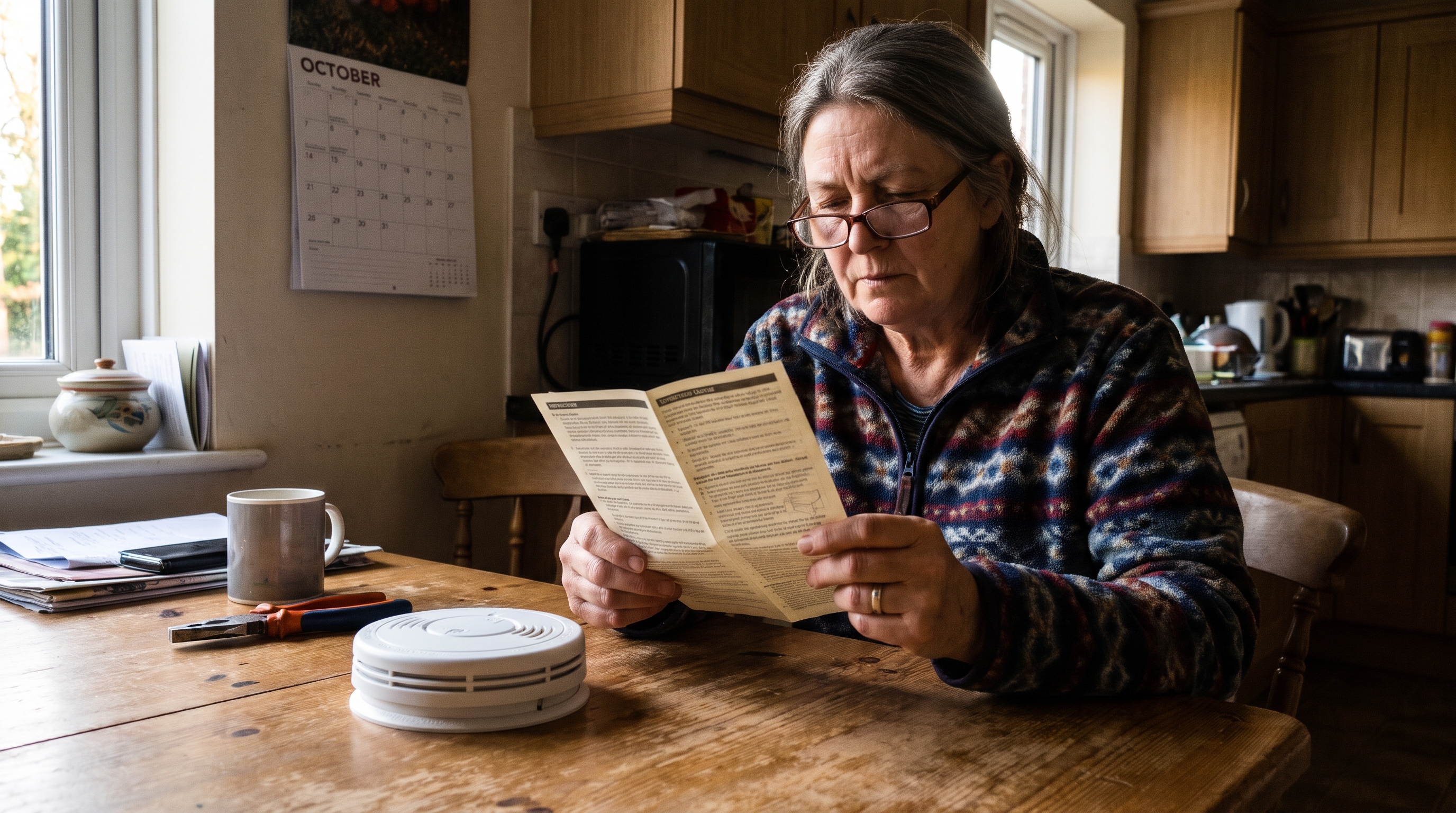
Illustrative household example. Use the worksheet for your own details.
My Smoke-Alarm Check
Date: __________ File under: Home Safety
1. Identify one alarm
Room / floor:
Model, if easy to find:
Directions found:
2. Check safely
☐ Household warned ☐ Safe reach / helper
Test date:
☐ Test sounded ☐ Failed ☐ Help needed
3. Act on the result
Replacement date / age:
Needed fix or replacement:
Who will complete it / by when:
4. Keep the habit
Next monthly test:
☐ Reminder set
Other alarms still to check:
Today’s win: One alarm has a recorded result, an action for any problem and a next-test reminder.
The name is right there. Then it’s gone.

You walk into the room. Stop. Try to remember what you came for.
You know the feeling. So why does this memory-support story begin with a kitchen habit?
Watch the opening and follow that connection to the daily blend behind it.
| Tap Here to Watch the Kitchen Connection → |
Stay steady,
Jordan Davies
The Ready Report
P.S. When did you last test the alarm near your bedroom? Hit reply with the month. Forward this to one person who might be waiting for the clock-change reminder.
P.P.S. One useful next read from the Household Resilience Network: Homestead Install: Food Costs More. What Did Families Do Before?.
Want a small food win at home? Tap Here for the Free Small-Space Food Quickstart →