
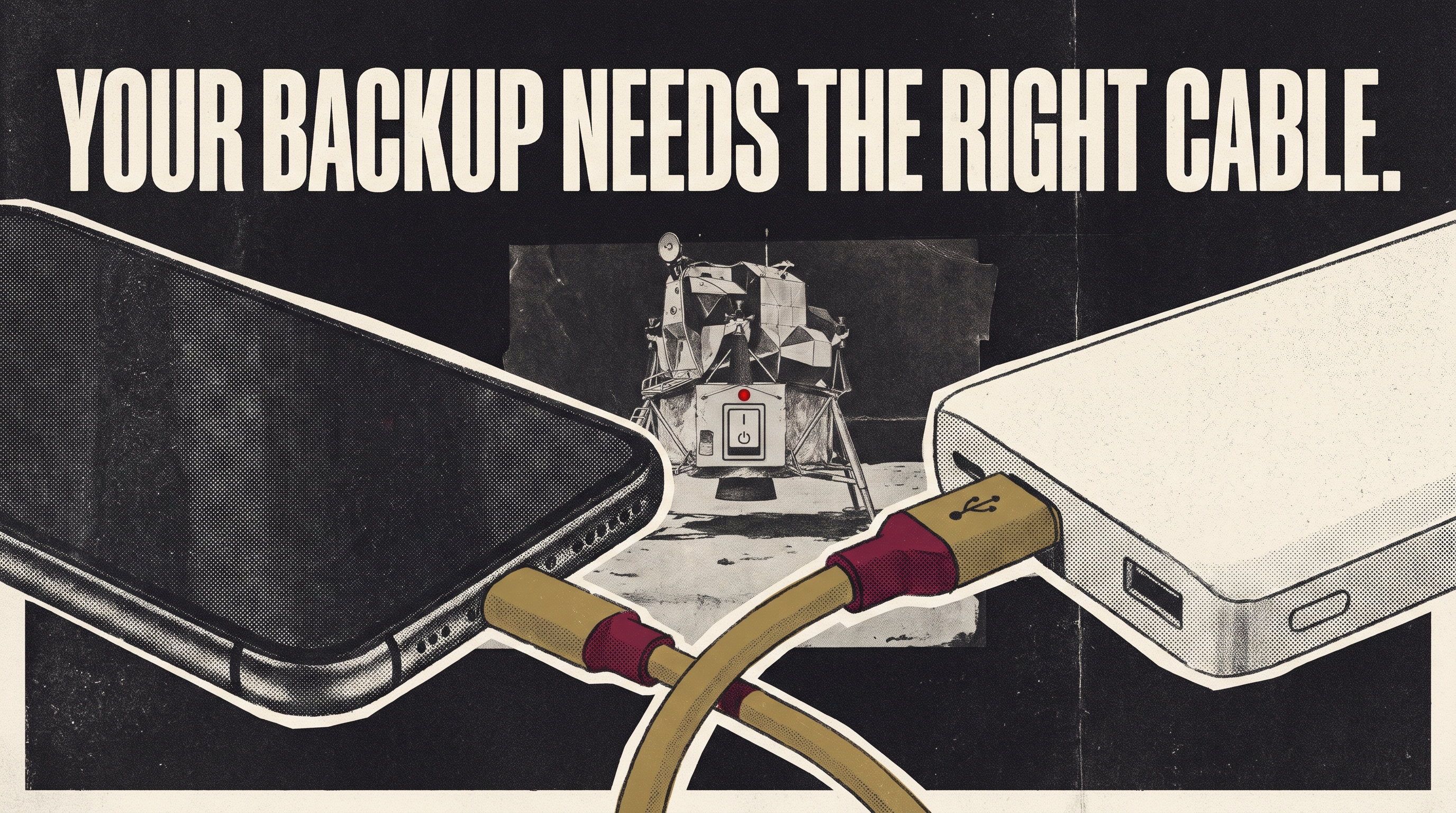
Your Daily Install connects what’s happening now with a useful pattern from the past—and one simple step you can take today to make your household more resilient.
Print the action worksheet below, fill it in, and add it to your Household Resilience Network binder.
What’s happening now?
The backup battery is in the bag. The cable is in the drawer. You are ready—until the two plugs do not match the phone you carry now.
Winter Weather Awareness Week is underway in New York and other seasonal readiness campaigns are running this week. One useful task travels well beyond snow country: test the charging setup you would use during a delay or outage.
A backup is a working set of parts, not one object. Try yours on an ordinary afternoon.
Has this happened before?
On April 13, 1970, an oxygen-tank failure changed Apollo 13’s job from landing on the Moon to getting three people home.
The crew used the lunar module as a lifeboat. It carried batteries, but those batteries had limits. Mission Control and the astronauts had to decide what could stay on, what could be shut down and how to preserve the power needed later.
NASA’s mission record describes careful checks of the available electricity, water and air supplies. Useful equipment had to work together for a journey it had not originally been meant to make.
The crew could not simply count batteries and call the problem solved. They had to know what those batteries could actually support.
What happened next?
The astronauts returned safely on April 17. That took engineering, teamwork and strict use of limited supplies.
A packed battery is only useful if the whole setup works. Try the bank, cable and phone together at your kitchen table. Finding the wrong plug there is a small problem. Finding it during an outage is a much bigger one.
Do you check where the bathroom is first?
Before the drive, you go once more. At the visit, you quietly look for the bathroom. What is the seven-second idea at the start of this bladder-support video—and how does it connect to FemiCore?
Tap Here to Watch the Seven-Second Idea →What can I do?
Take 10 minutes with your current phone, power bank and travel cable. Check the maker’s instructions and inspect for damaged cables or a swollen battery. Do not use damaged equipment.
Connect the set and confirm that the phone shows it is charging. Then check how to recharge the power bank itself. A charging icon proves the connection works; it does not prove a full day of backup.
Pack the tested cable with the bank. Label it if several look alike. Recharge as directed and choose a reminder to check it again. Keep batteries out of hot parked cars and follow the maker’s storage advice.
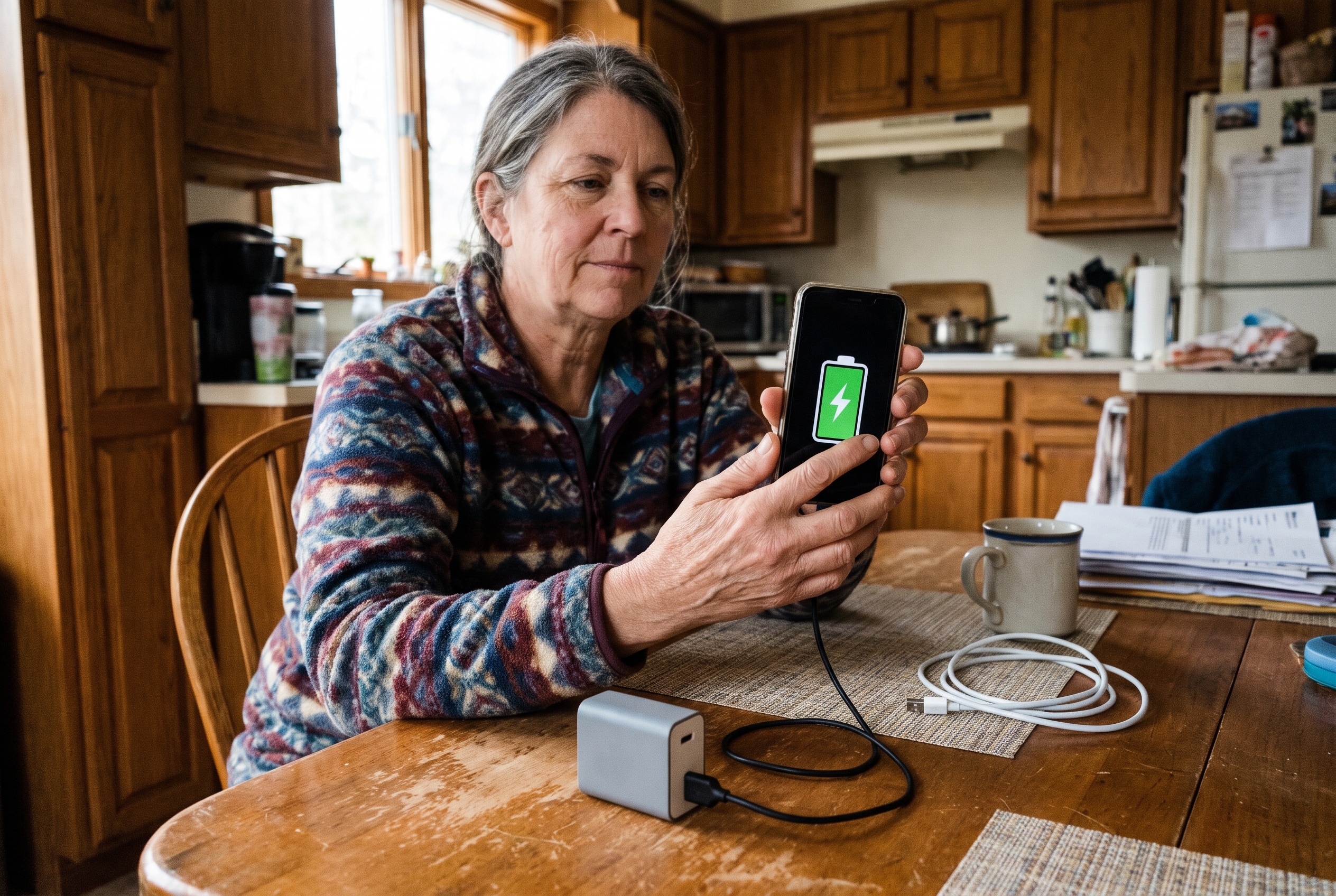
Illustrative household example. Use the worksheet for your own details.
My Working Charging Kit
Date: __________ File under: Power Readiness
Test the chain
Phone / bank / cable matched:
☐ Charging icon confirmed ☐ Equipment sound
How I recharge the bank:
Keep the parts together
Kit location:
Next charge check:
☐ Travel cable packed with the bank.
Today’s win: One charging kit has been tried with the phone you actually use.
Could part of your food backup keep growing?
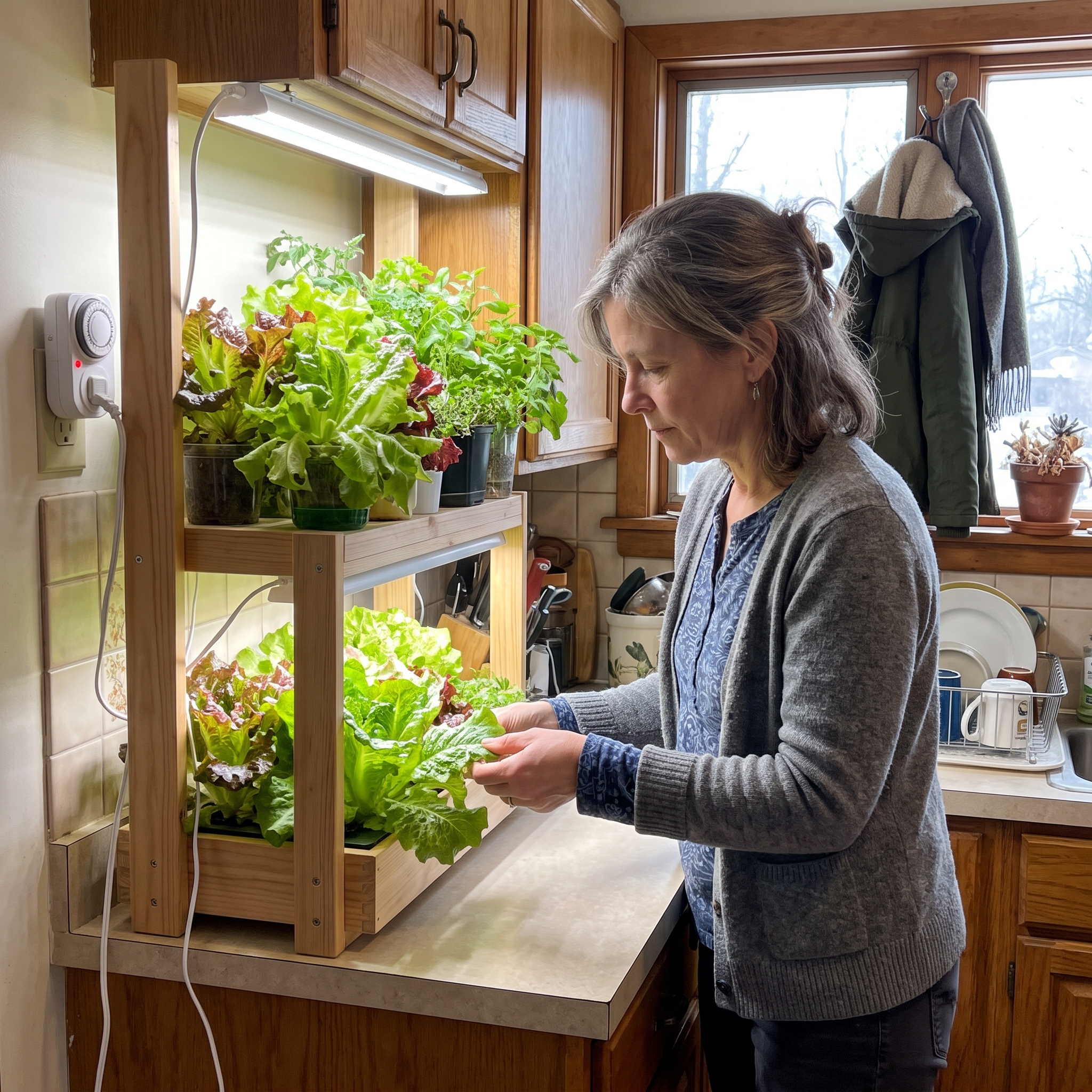
A shelf of food is useful. So is a small fresh-food supply you can keep tending.
Start with one food you already eat. Picture steps in the COMPLETE Blueprint help you get going in a small space, with indoor options for colder months.
See how to add growing food to your household plan without taking on a whole garden.
| Tap Here to See the COMPLETE Blueprint → |
Stay steady,
Jordan Davies
The Ready Report
P.S. Have you ever packed the wrong charger? Hit reply with a yes or no. Forward this before someone heads out with a backup that cannot connect.
P.P.S. Before another takeout order, see what you could make from the food already in your kitchen. The Household Playbook includes restaurant-style meals and ways to use more of the food you buy. Click Here to Look Inside the Household Playbook →