
Your Daily Install connects what’s happening now with a useful pattern from the past—and one simple step you can take today to make your household more resilient.
Print the worksheet below, fill it in, and add it to your Household Resilience Network binder.
What’s happening now?
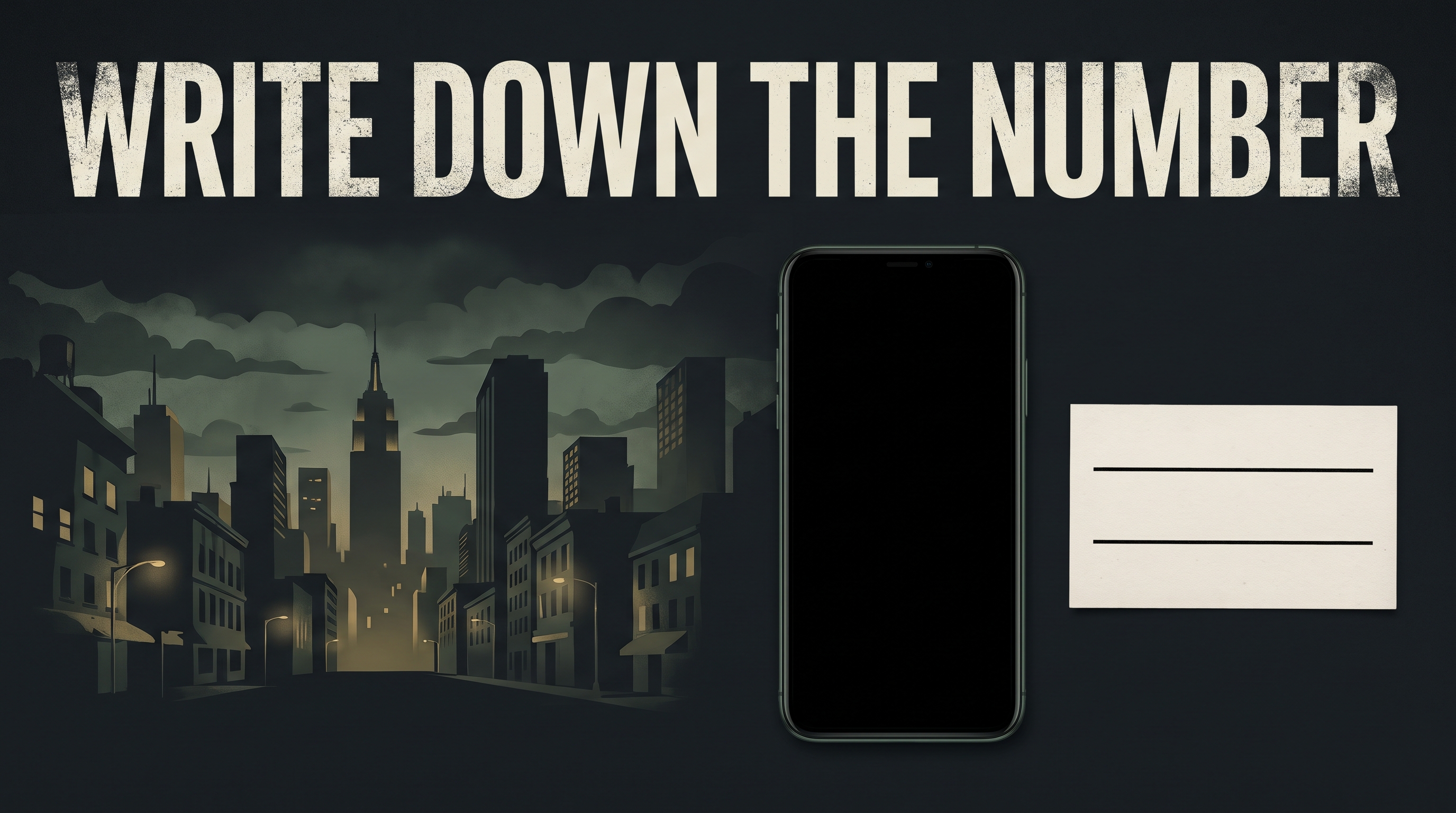
You know exactly which name to tap. But if the phone will not turn on, could you dial the number?
With clocks moving back today, trips home now fall in the dark for more families. Use the change in routine for a small check: put one trusted contact somewhere other than the screen.
A charged phone and a written number solve different problems. Keep both in the plan.
Has this happened before?
On August 14, 2003, a huge blackout spread across the Northeast and into Canada. Commuters were away from home. Traffic signals went dark. People tried to find out what had happened and reach one another.
Transportation reviews later described communication failures as power-dependent equipment stopped working. Some ordinary phone lines proved more reliable than systems that needed local electricity.
The lesson was not to buy every kind of phone. It was to notice what the usual method depended on. A contact stored in only one device can become hard to reach at exactly the wrong moment.
What happened next?
The blackout prompted major work on power reliability and emergency coordination. At home, the smaller lesson still applies.
Keep the information as well as the device. A paper card will not restore cell service. It can let you use a borrowed phone when yours is lost, flat or damaged.
Your phone is dead. The instructions are on it.
No screen. No saved how-to. Put useful food and household skills somewhere you can open without a charger. What would you want on that shelf?
PRESS Here to Look Inside the Handbook →What can I do?
Take 10 minutes to make two wallet-size cards. Put one local trusted contact and one out-of-town contact on each. Confirm the numbers with those people. Include your household’s agreed meeting place.
Keep one card in a wallet and give the other to a household member. Leave out passwords, account numbers and other private details. For children, choose age-appropriate information and review it together.
Practise finding the card and reading the number. Ask the contact how they would prefer a check-in during a disruption. Do not make a test call to an emergency number.
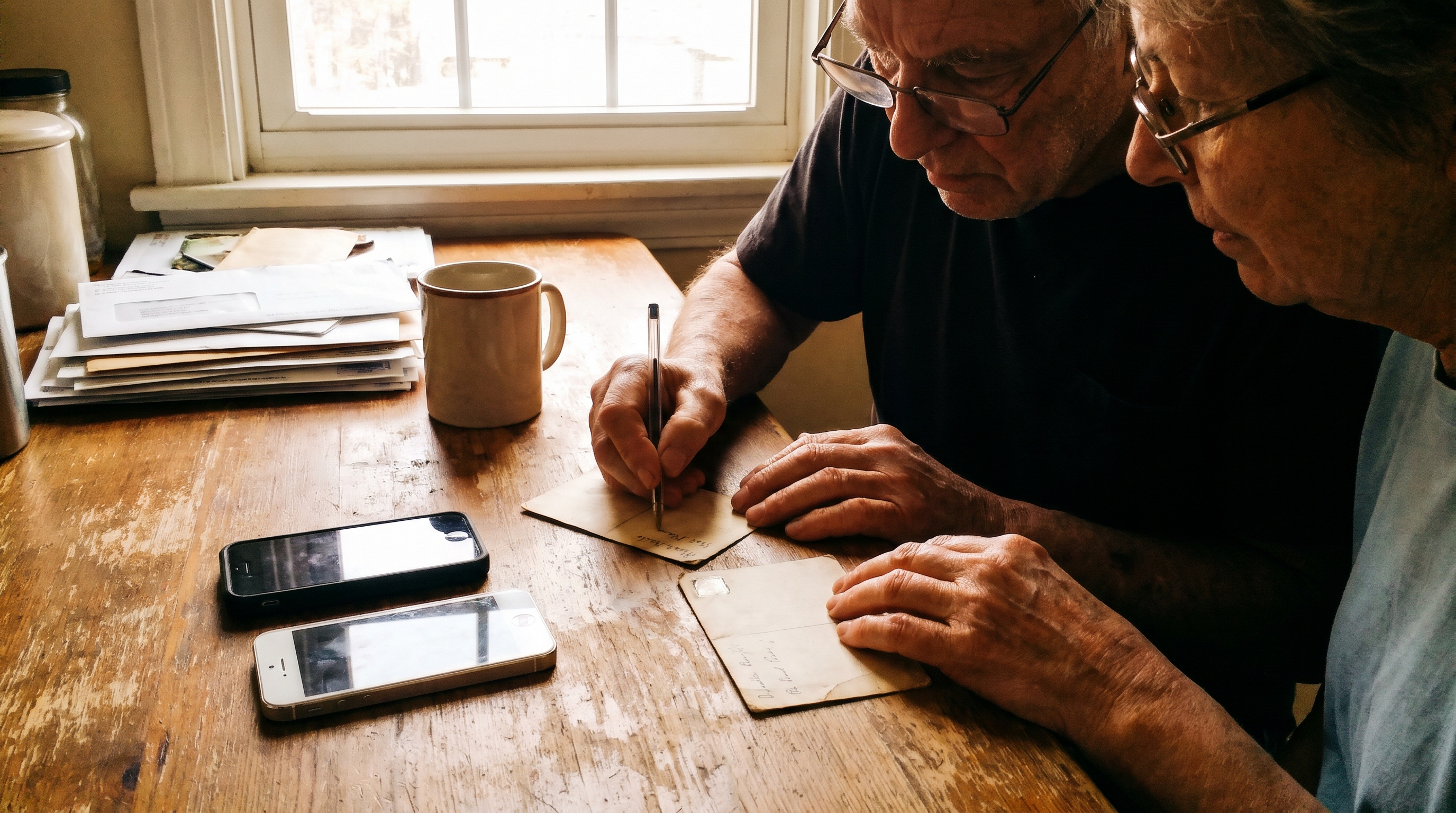
Illustrative household example. Fill in your own details below.
My Off-Phone Contact Card
Date: __________
File under: Family Communication
Keep a copy with you
Trusted local contact / number:
Out-of-town contact / number:
Make sure it works
Number confirmed on:
Agreed meeting place:
☐ Wallet copy ☐ Household copy
Today’s win: Two usable paper contact cards are made, and the numbers have been checked.
Keep a little more of dinner close to home.
You have a plan for reaching your people. What about a simple first step toward growing part of their food?
A modern Victory Garden does not need a big backyard. Start with one familiar food, a small container and a place you can tend. Indoor options make a winter start possible, too.
The COMPLETE Blueprint puts the steps in pictures so you can move from “someday” to a clear starting plan.
Your VIP link opens over 80% off the complete digital Blueprint plus both bonuses. See what could fit your home.
| TAP Here for Your Modern Victory Garden → |
Stay steady,
Jordan Davies
The Ready Report
P.S. Could you dial one family member’s number without your phone? Hit reply with yes or not yet. Forward this to the person you would put on your card.
P.P.S. Want the short route to the COMPLETE small-space food-growing Blueprint? PRESS Here to See the Starting Plan →