
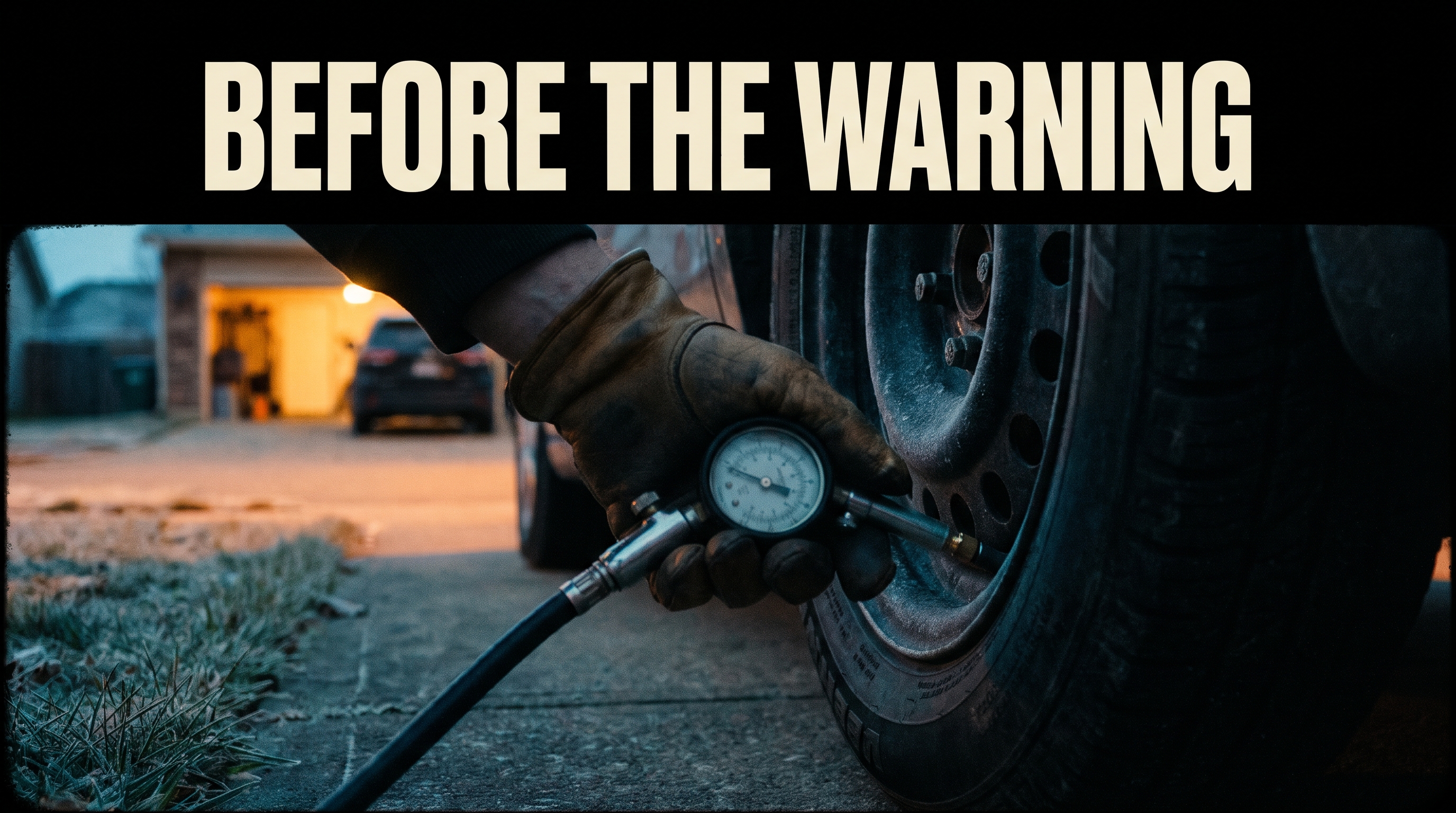
Your Daily Install takes something happening now, looks at what happened before, and gives you one thing to do at home.
Print the worksheet and add it to your Household Resilience Network binder.
What’s happening now?
Winter preparedness weeks are starting across parts of the U.S. Missouri’s runs November 2–6; other states follow next week. This is a good reminder to check something colder air changes before a road turns icy: tire pressure.
The tires can look much the same while losing pressure as the air cools. A warning light may come later. The small label inside the driver’s door gives you the number to check against.
Has this happened before?
In 2000, Congress passed the TREAD Act. It called for tire-pressure warnings in new vehicles. Federal rules later required systems that alert drivers when tires are badly underinflated.
What happened next?
That made a warning visible on the dashboard. It did not turn the warning into a monthly pressure check.
The lesson is to look before the alarm. NHTSA still advises checking tires with a gauge, using the vehicle maker’s cold-pressure target. The number molded on the tire’s side is not your car’s normal target. “Cold” means the car has sat for at least three hours.
Put one fresh food closer to home
A quick trip for a handful of greens still takes time, fuel, and money. What if you could pick some at home? The COMPLETE Blueprint shows small-space growing with indoor options for the colder months.

| TAP Here for the Complete Blueprint → |
What can I do?
Park somewhere safe and level. With the tires cold, find the recommended front and rear pressure on the driver’s door label or in the manual. Use a gauge to record each tire’s reading. If you know how, adjust to the maker’s target; otherwise ask a tire shop for help.
Follow the manual for the spare, too. A tire that keeps losing air needs attention. Do not just erase a warning and carry on. Today’s win: four readings matched to the right number.
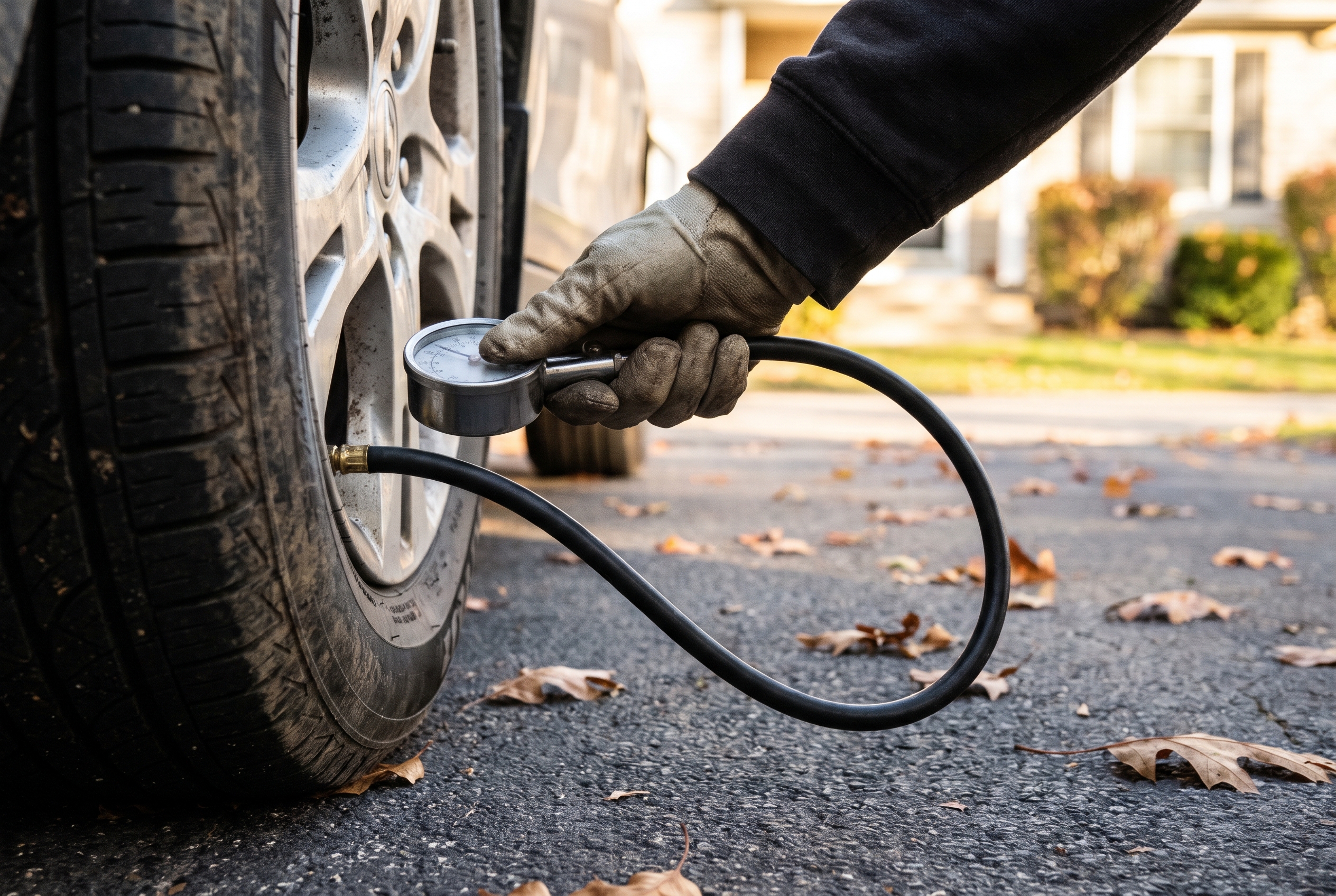
Check the Number on the Door
Date: __________________
Front / rear target from door label
____________________
FL ____ FR ____ RL ____ RR ____
____________________
Air added or help needed
____________________
Next monthly check date
____________________
Another power bill. Still no backup?
You pay every month. The lights can still go out. Why does this power-plan video begin with a Vietnam veteran’s “anti-grid” idea?
Stay steady,
Jordan Davies
The Ready Report
P.S. Did the door label and the tire sidewall show different numbers? Hit reply and tell me—no need to send a photo of your vehicle.
P.P.S. Want to see the Black Friday offer for the Complete Blueprint? TAP Here to See the Black Friday Offer →