
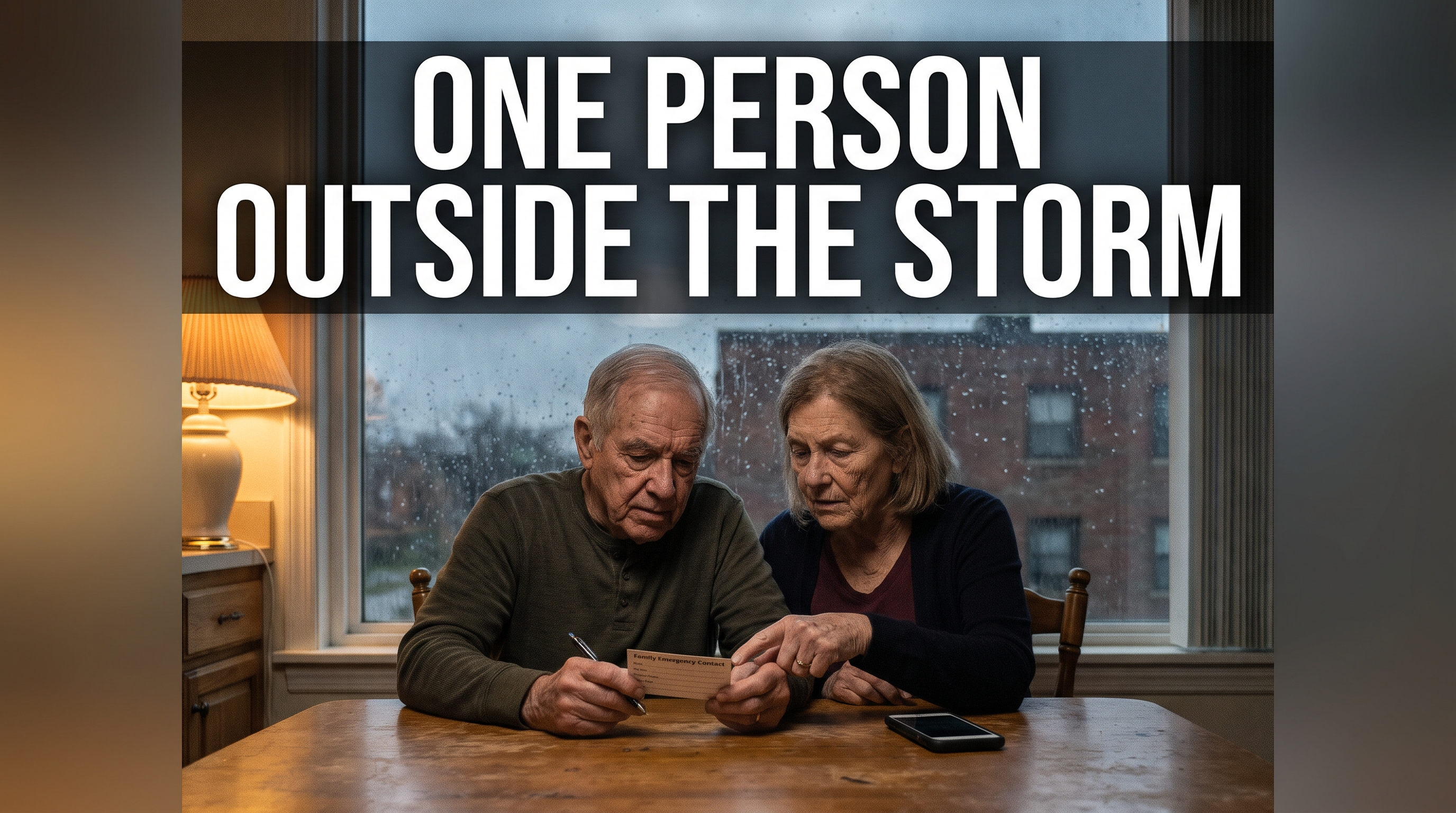
Two people are trying to reach each other. Both keep calling. Neither knows whether the other is safe.
A family plan needs more than “call me.” It needs a second person everyone knows how to reach.
SPONSORED · 4 FOOT FARM BLUEPRINT
Could a small food backup start inside your home?
You do not need acreage to begin learning. The COMPLETE 4 Foot Farm Blueprint includes small-space and indoor options with pictures you can follow. See the Modern Victory Garden and start with one food your household uses.
| TAP Here for the COMPLETE Blueprint → |
Tonight’s Install
One useful change for the home you already have. Print the worksheet below and add it to your Household Resilience Network binder.
ACTION BRIEF
Time: 15 minutes
Do: Ask one out-of-area person to serve as the family message contact.
Win: they agree, everyone has the number, and one test text is received.
What’s happening now?
Winter Weather Preparedness Week runs November 2–6 in Missouri. A useful part of preparation is a family communication plan. Illinois emergency guidance recommends an out-of-area contact and notes that texts sometimes work when networks are overwhelmed.
That is an option to prepare, not a promise that a message will always get through.
When working phones could not carry every call

Illustrative historical reconstruction.
After the Loma Prieta earthquake struck the San Francisco Bay Area on October 17, 1989, communication became part of the crisis. People wanted to know who was safe. Families, workers, and emergency responders were all trying to reach someone.
The U.S. Geological Survey’s account of the earthquake’s lifelines describes telephone network congestion among the problems residents faced. A phone did not have to be physically broken for a call to fail.
Too many attempts could strain the system.
That difference is easy to miss at home. We tend to think of a phone as either working or not working. A busy network creates another state: the device may work, but the connection you need is not available when you try.
The historical event was an earthquake, not a forecast of a local winter outage. Today’s networks also differ from the landline system of 1989. We should not pretend the same equipment or failure will repeat.
The useful pattern is the rush of demand. During a shared event, many households may seek the same limited service at once. A plan that depends on one call at one moment has a weak point.
A family contact outside the affected area gives everyone a known place to try. Short texts may offer another path. Neither method guarantees service, but both can be arranged before people are worried.
Tonight, you can agree on who will collect updates and what a useful update contains: your name, location, safety status, and next check-in time.
The old congestion problem teaches a modest lesson. Do not wait until every phone is busy to decide how your family will pass information.
How did a message cross the Andes?
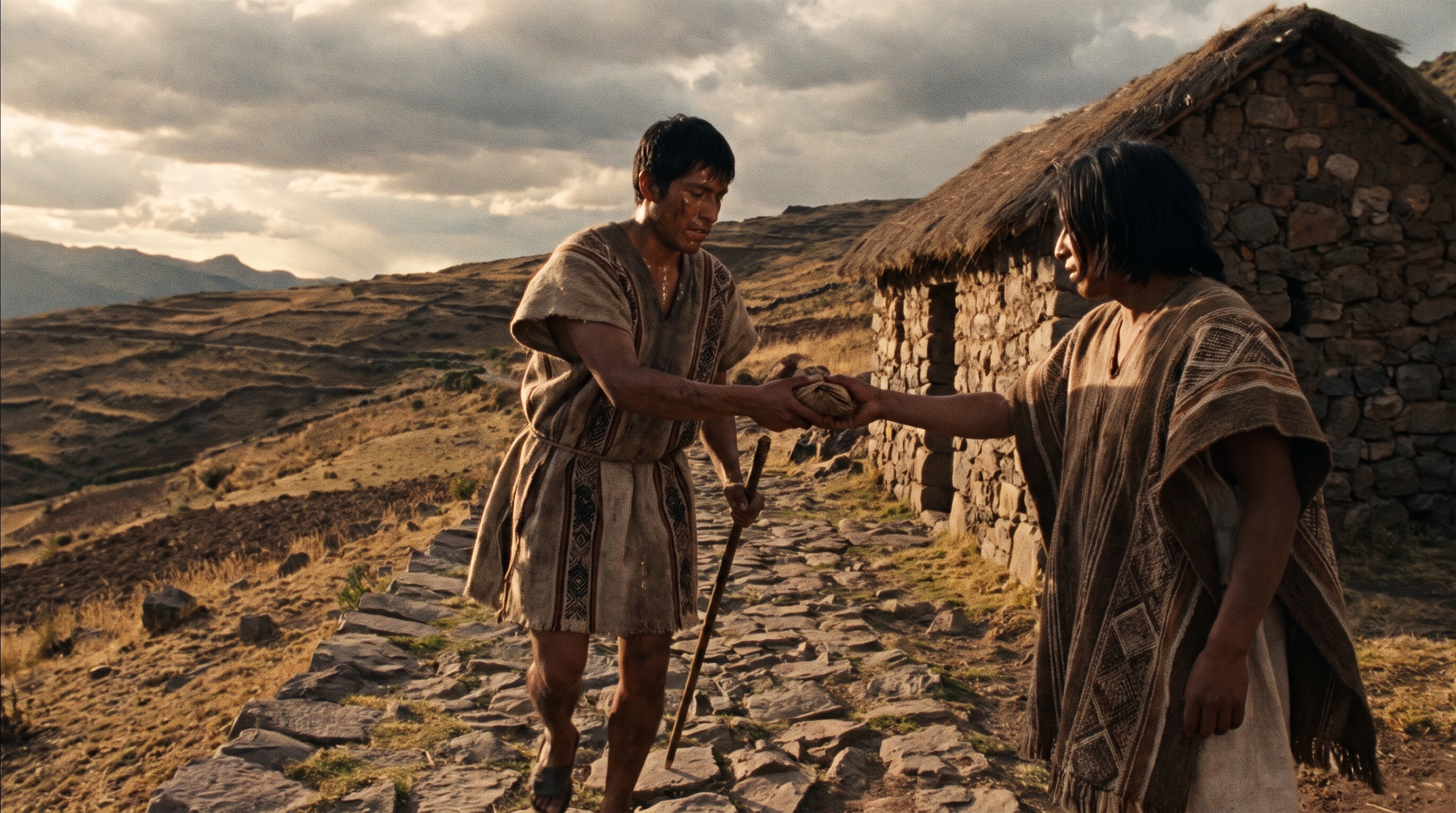
Illustrative historical reconstruction.
In the Inka road system of the fifteenth and early sixteenth centuries, runners carried messages in relays. A messenger did not have to cover the whole empire alone. Another runner waited along the route.
The Smithsonian’s National Museum of the American Indian describes stations called chaskiwasis, placed roughly five to seven miles apart. The runners, called chaskis, handed messages and goods onward through this network.
That arrangement made the next handoff part of the system. There was a route, a role, and a place where the next person could take over. The road itself was only one part of communication.
This was an imperial system, supported by authority and labor arrangements very different from a voluntary family plan. We should not romanticize the empire or suggest that a modern household needs to copy its organization.
The small comparison is about a known relay. If everyone must reach one another directly, each person needs several successful connections. A shared contact can gather separate updates and help pass them on.
Your contact is not expected to run down a mountain or manage a crisis for you. Their job can be as simple as noting who checked in and sharing the agreed information with the family.
That only works if the person accepts the role. An unasked relative is not yet a plan. A number saved in one phone is not yet shared knowledge.
So agree on the handoff before you need it. Write the contact’s name and number where each person can find them. Test an ordinary message while everything is calm.
A relay begins with knowing who receives the next message. That is the part of the old road system your household can use tonight.
SPONSORED · The Lost Frontier Handbook
The how-to is saved. Your phone is dead.
You remember saving the steps. Now the screen is black. Put food, water, and household skills on paper you can open without a charger. Which skill would you want first?
| PRESS Here to Look Inside the Handbook → |
THE PATTERN TO KEEP
Across BOTH examples, a message needed a workable route and a known handoff, not simply a strong wish to reach someone.
What can I do tonight?
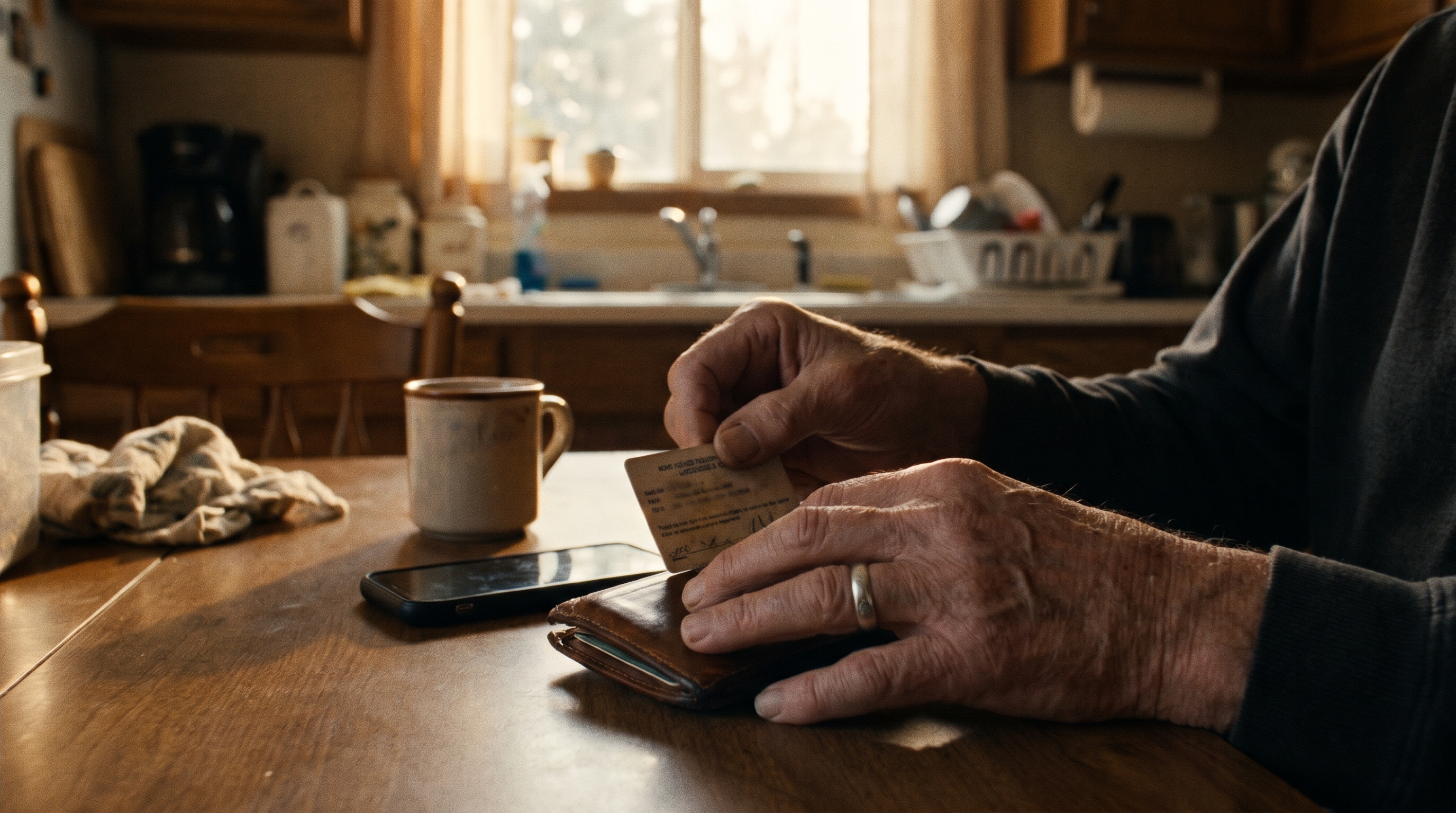
Ask a trusted person outside your local area whether they will be the family contact. Share the number with the household and keep a paper copy in wallets. Send one agreed test text: name, location, safe or help needed, next check-in.
Confirm it arrived. Keep real emergency calls for emergency help; the family contact does not replace 911.
HOUSEHOLD RESILIENCE NETWORK · BINDER WORKSHEET
Pick One Contact Outside the Trouble
Date: __________________
Out-of-area contact and consent
Number shared and written down?
Test text received?
Our next-check-in wording
Status Check
Win: they agree, everyone has the number, and one test text is received.
SPONSORED · 4Patriots
What could you keep running in a blackout?
Your phone is fading. The fridge has gone quiet. A rechargeable power station gives chosen devices another source of power. Could this one cover the essentials you would miss first?
The takeaway
Ask one out-of-area person to serve as the family message contact. Keep the change small enough to finish, and leave a record you can check again.
Stay steady,
Jordan Davies
The Ready Report
A clear plan beats a rushed guess.
P.S. Do you already have an out-of-area contact, or is everyone trying to call everyone? Reply with which. Share this with the person you would ask to be your family’s contact.
One more useful read: Put the address inside the parcel, too →
P.P.S. · 4 FOOT FARM BLUEPRINT
Start with one food your household already eats. See the $7 Black Friday Blueprint offer →
NWS: this week’s preparation
Illinois: family communication plan
USGS: Loma Prieta lifelines
Federal earthquake communication report
Smithsonian: Inka road administration
Images are illustrative reconstructions, not archival photographs.